
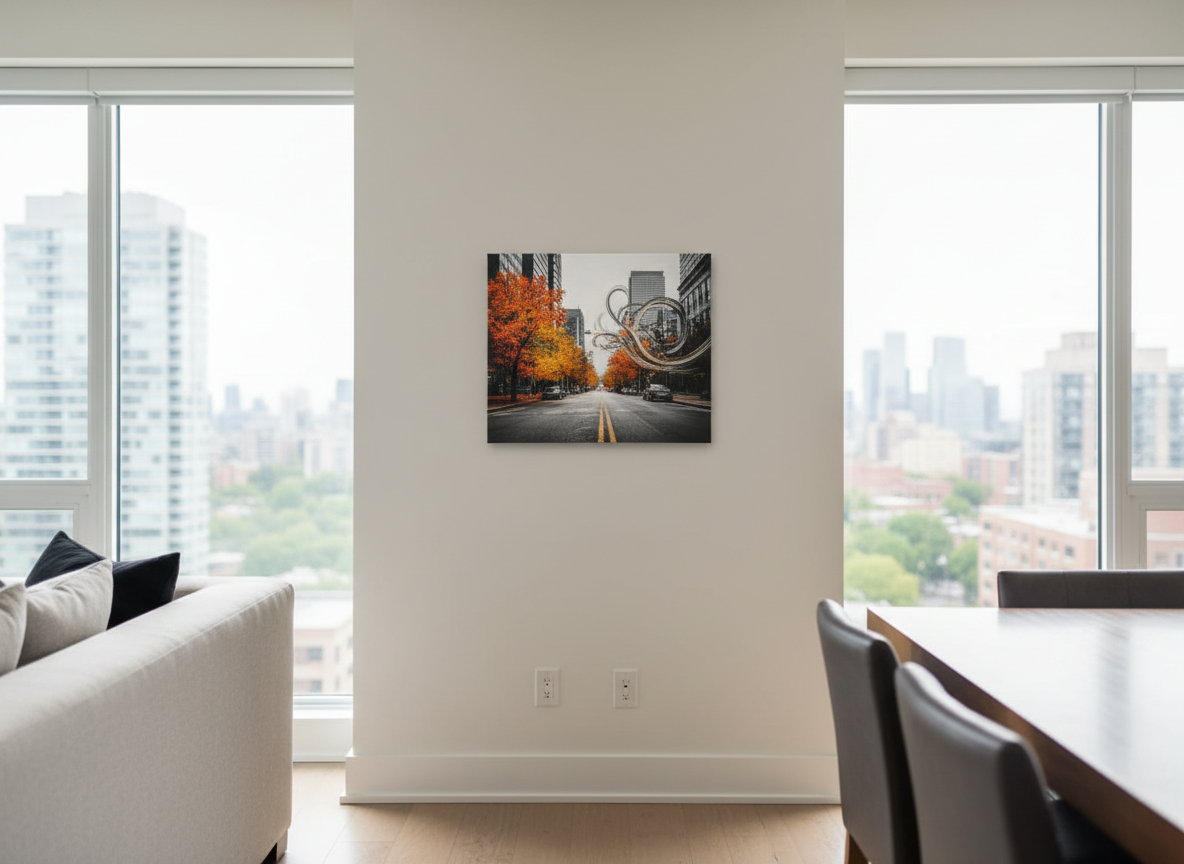
If you’ve ever ordered a print online and thought, “Well… that’s not what I expected,” you already understand the problem.
A photo can look incredible on your phone and somehow end up looking flat, dull, or just a little off when it arrives. And it’s not because your photo is bad. It’s because the process matters.
At Canvas Prints Toronto, we’re a family-run company that specializes in museum-grade canvas prints. We use premium cotton canvas, pigment-based archival inks, and Canadian fir stretcher bars made in-house. We also offer free delivery on every order.
This post is a behind-the-scenes look at how a great canvas print is actually made — without the fluff, without the mystery, and without pretending it’s “magic.” It’s materials, process, and craftsmanship done properly.
Step 1: Start with the right surface (premium cotton canvas)
The canvas itself isn’t just a background. It’s part of the final look.
Premium cotton canvas has a texture that adds depth and warmth to an image. It helps photos feel more like wall art and less like a shiny print. It also tends to look great in real homes because it doesn’t glare the way glossy surfaces can.
If you’ve ever seen a canvas that looks plasticky or overly smooth, that’s usually a sign the surface was chosen for speed and cost, not for the finished result.
Step 2: Print with inks designed to last (pigment-based archival inks)
Ink is one of those details you don’t think about until you’ve lived with a print for a while.
We use pigment-based archival inks, which are designed for longevity. That matters because the whole point of printing a memory is to keep it looking good — not watch it slowly fade or lose richness.
Pigment inks are especially good for:
- Deep blacks that don’t look washed out
- Smooth gradients (skies, shadows, soft backgrounds)
- Natural-looking tones that don’t drift over time
In plain terms: your canvas keeps its “wow” longer.
Step 3: Use a print system built for photo quality (12-ink HP Pro Photo)
A canvas print can only look as good as the system that prints it.
We print using a 12-ink HP Pro Photo system, which helps capture subtle tones and fine detail. That matters for the kinds of images people actually hang in their homes:
- Family portraits
- Travel photos
- Nature and landscape scenes
- Pet photos
- Fine art reproductions
A strong print system helps avoid the most common “cheap print” problems: muddy shadows, flat colors, and that slightly lifeless look where everything feels compressed.
Step 4: Build the structure (Canadian fir stretcher bars made in-house)
Here’s the part most people never think about: what a canvas is stretched on.
A canvas print isn’t just an image. It’s a built object — and the stretcher bars are the foundation.
We use Canadian fir stretcher bars made in-house. That’s a craftsmanship choice that affects how the canvas looks on the wall and how it holds up over time.
When stretcher bars are weak or poorly made, you can end up with a canvas that feels flimsy or looks less crisp. When the structure is solid, the canvas stays tight and clean-looking — the way it should.
Step 5: Stretching matters (tight, clean, and finished)
Stretching is where a canvas goes from “printed” to “hangable.”
A well-stretched canvas looks polished. The surface sits tight. The edges look clean. The whole piece feels substantial.
A poorly stretched canvas can look wavy or loose, especially over time. That’s why the build and the materials behind the image matter as much as the image itself.
Step 6: Why this process makes a difference in real homes
In a Toronto home — whether it’s a condo, a townhouse, or a family home — wall art has to do more than look good up close. It has to look good in real lighting, at real angles, in a space you actually live in.
Canvas works beautifully for that because:
- It has a warm, textured finish
- It doesn’t rely on glossy shine
- It feels complete without needing a heavy frame
And when it’s made with premium materials and a solid build, it looks like something you chose intentionally — not something you grabbed last minute.
What kinds of photos look best on canvas?
Canvas is especially flattering for:
- Family photos (especially candid ones)
- Nature and landscape images
- Travel photos
- Fine art reproductions
It’s also a great option if you want your wall art to feel personal, not generic.
The simple part: online ordering + free delivery
We’re set up for online ordering and we offer free delivery on every order.
So if you’ve been meaning to turn a favorite photo into something you can actually live with — not just store on your phone — canvas is one of the best ways to do it.
And if you’re the kind of person who cares about quality (but doesn’t want to become a printing expert), this is the whole point of museum-grade craftsmanship: you get a canvas that looks right, feels substantial, and holds up.
If you’re in Toronto and you’re ready to print something that deserves wall space, we’d love to make it for you.