
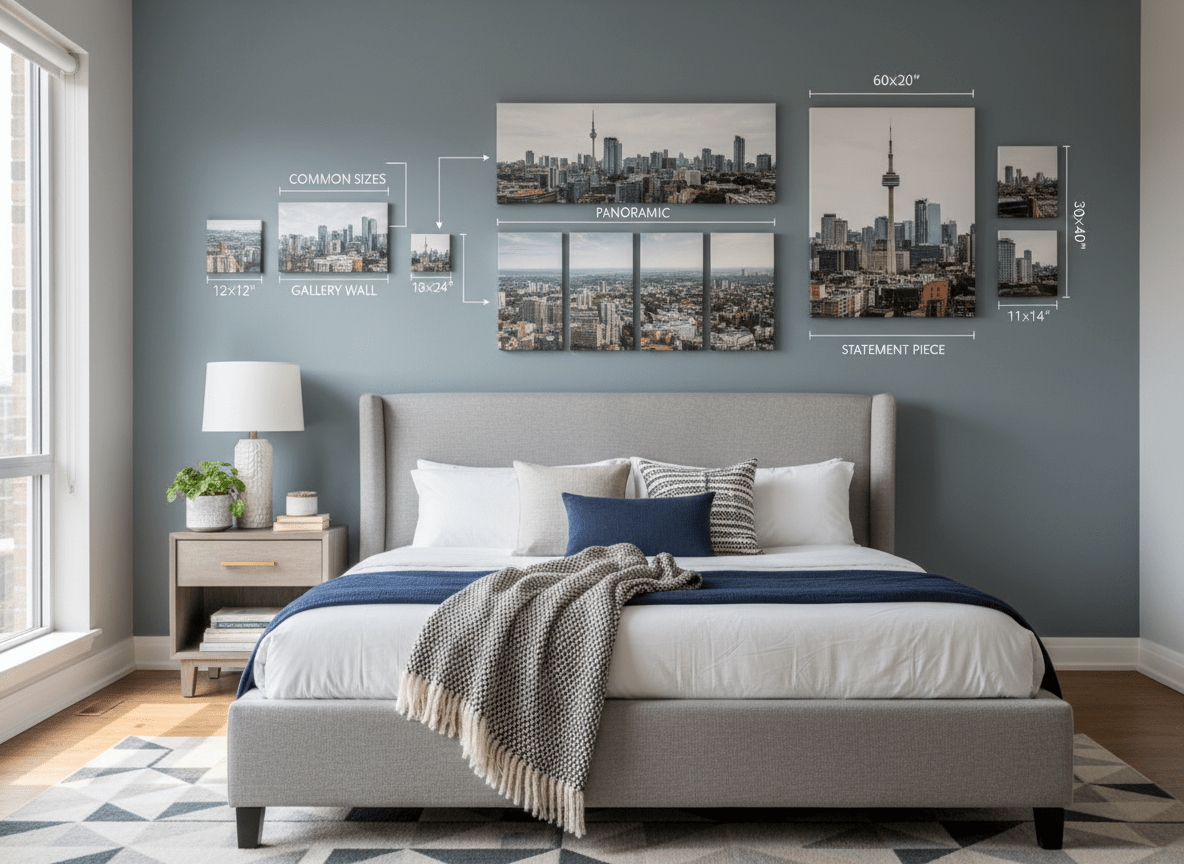
Selecting the right size canvas print can transform a room from ordinary to extraordinary—or create an awkward mismatch that never quite looks right. For Toronto homeowners navigating everything from compact downtown condos to spacious Rosedale homes, understanding canvas sizing principles ensures your art investment enhances your space perfectly.
This comprehensive guide demystifies canvas print sizing, providing practical frameworks for choosing dimensions that complement your walls, furniture, and overall design vision.
Understanding Canvas Print Dimensions
Canvas prints are measured in width x height format. A 24×36 inch canvas is 24 inches wide and 36 inches tall in portrait orientation, or 36 inches wide and 24 inches tall in landscape orientation. Understanding this basic measurement convention helps you visualize how pieces will fit your space.
Common Canvas Sizes:
- Small: 8×10, 11×14, 16×20 inches
- Medium: 18×24, 20×30, 24×36 inches
- Large: 30×40, 36×48, 40×60 inches
- Extra Large: 48×72, 60×80 inches and beyond
These standard sizes work well for most applications, but custom sizing allows perfect fits for unique spaces.
The Two-Thirds Rule for Wall Coverage
The foundational principle of canvas sizing is the two-thirds rule: your canvas print (or gallery wall arrangement) should cover approximately two-thirds of the wall space above your furniture.
Measuring for the Two-Thirds Rule:
- Measure the width of your furniture piece (sofa, bed, console table, etc.)
- Multiply by 0.67 (two-thirds)
- This gives you the ideal width for your canvas or gallery wall
Example: A 90-inch sofa × 0.67 = 60 inches. Your canvas or gallery wall should be approximately 60 inches wide.
This proportion creates visual balance without overwhelming the space or appearing too small. While not an absolute rule, it provides an excellent starting point for most rooms.
Room-by-Room Sizing Guidelines
Living Rooms
Living rooms typically accommodate the largest canvas prints in your home.
Above the Sofa: This is prime real estate for statement art. For a standard 84-90 inch sofa, consider:
- Single large canvas: 48×36 to 60×40 inches
- Horizontal panoramic: 60×20 to 72×24 inches
- Gallery wall: 60-65 inches wide total, 30-36 inches tall
Focal Walls: Walls without furniture can handle even larger pieces:
- Medium rooms (12×14 feet): 40×60 to 48×72 inches
- Large rooms (15×20+ feet): 60×80 inches or larger
Above Console Tables and Sideboards: These pieces typically measure 48-72 inches wide:
- Single canvas: 30×40 to 40×50 inches
- Pair of canvases: Two 20×30 or 24×36 inch pieces
Bedrooms
Bedroom canvas sizing depends on bed size and wall space.
Above the Bed (Headboard Wall):
- Queen bed (60 inches wide): 40×30 to 48×36 inch canvas
- King bed (76 inches wide): 48×36 to 60×40 inch canvas
- California King (72 inches wide): 48×36 to 54×40 inch canvas
Alternative Arrangements:
- Two matching canvases: Each 24×36 or 30×40 inches, hung side-by-side
- Three-piece set: Three 16×20 or 20×30 inch canvases in a row
Accent Walls: Bedrooms often have walls without furniture that work beautifully for larger statement pieces (40×60 to 48×72 inches).
Dining Rooms
Dining room art should complement your table without overwhelming the space.
Above Buffets and Sideboards:
- Standard sideboard (60-72 inches): 40×30 to 48×36 inch canvas
- Larger buffet (72-84 inches): 48×36 to 60×40 inch canvas
Feature Walls: If you have a wall without furniture, consider a large statement piece that becomes a conversation starter during meals (40×60 to 60×80 inches).
Home Offices
Office spaces benefit from motivational or calming art sized appropriately for focused work environments.
Above Desks: Keep proportions comfortable for viewing while working:
- Standard desk (48-60 inches): 30×24 to 40×30 inch canvas
- Large desk (72+ inches): 40×30 to 48×36 inch canvas
Accent Walls: Offices with seating areas or blank walls can accommodate larger pieces (36×48 to 48×60 inches).
Hallways and Entryways
These transitional spaces require careful sizing to avoid overwhelming narrow areas.
Hallway Gallery Walls: Multiple smaller pieces (11×14 to 16×20 inches) work better than single large pieces in narrow hallways.
Entryway Statements: Foyer walls can handle medium to large pieces depending on ceiling height:
- Standard 8-foot ceilings: 30×40 to 40×50 inches
- High ceilings (10+ feet): 40×60 to 48×72 inches
Bathrooms
Bathrooms accommodate smaller canvas prints that add personality without overwhelming compact spaces.
Powder Rooms: 11×14 to 16×20 inches Master Bathrooms: 16×20 to 24×36 inches, depending on available wall space
Ceiling Height Considerations
Toronto homes feature varying ceiling heights, from 8-foot ceilings in older homes to 10+ foot ceilings in modern condos and renovated spaces. Ceiling height significantly impacts appropriate canvas sizing.
Standard 8-Foot Ceilings:
- Leave 6-12 inches between the top of your furniture and bottom of your canvas
- Leave 12-18 inches between the top of your canvas and ceiling
- Maximum practical canvas height: approximately 48 inches
9-10 Foot Ceilings:
- You have more flexibility with vertical space
- Can accommodate taller canvases (48-60 inches) comfortably
- Consider vertical orientation for dramatic impact
High Ceilings (10+ feet):
- Extra-large canvases (60×80 inches or larger) work beautifully
- Multiple stacked canvases create impressive vertical arrangements
- Don’t be afraid to go big—undersized art looks lost in high-ceilinged spaces
Condo-Specific Sizing Strategies
Toronto’s condo market presents unique sizing challenges with smaller rooms and specific proportions.
Compact Living Rooms (10×12 to 12×14 feet):
- Focus on medium-sized pieces: 24×36 to 36×48 inches
- Avoid oversized art that overwhelms limited space
- Vertical orientations can make rooms feel taller
Open-Concept Spaces:
- Use canvas art to define zones within open layouts
- Larger pieces (40×60 to 48×72 inches) work well as focal points
- Maintain consistent sizing across visible sightlines for cohesion
Small Bedrooms:
- Above bed: 30×40 to 40×50 inches maximum
- Accent walls: 24×36 to 36×48 inches
- Consider vertical orientations to maximize limited wall width
Multi-Panel and Gallery Wall Sizing
Diptychs and Triptychs
Multi-panel canvas sets create dramatic impact while offering sizing flexibility.
Diptychs (Two Panels):
- Each panel: 20×30 to 30×40 inches
- Total width: 40-60 inches plus 2-4 inch gap between panels
- Works beautifully above queen beds or medium sofas
Triptychs (Three Panels):
- Each panel: 16×20 to 24×36 inches
- Total width: 48-72 inches plus gaps
- Ideal for king beds, large sofas, or dining room feature walls
Spacing: Leave 2-4 inches between panels for visual separation while maintaining cohesion.
Gallery Walls
Gallery walls combine multiple canvases in curated arrangements.
Planning Gallery Wall Dimensions:
- Measure your wall space
- Apply the two-thirds rule for width
- Plan total height (typically 30-48 inches)
- Arrange pieces on the floor first to perfect spacing
Piece Sizing for Gallery Walls:
- Mix sizes for visual interest: combine 11×14, 16×20, and 20×30 inch pieces
- Maintain 2-3 inches between pieces
- Keep the overall arrangement balanced with larger pieces anchoring the composition
Viewing Distance and Canvas Size
The distance from which you’ll typically view your canvas affects appropriate sizing.
Close Viewing (3-5 feet): Smaller to medium pieces (16×20 to 30×40 inches) allow appreciation of detail.
Medium Viewing (6-10 feet): Medium to large pieces (30×40 to 48×60 inches) maintain impact from typical room distances.
Far Viewing (10+ feet): Large to extra-large pieces (48×72 inches and beyond) ensure visibility and impact across spacious rooms.
Orientation Matters: Portrait vs. Landscape
Portrait Orientation (Vertical):
- Makes rooms feel taller
- Works well in narrow spaces
- Ideal for hallways, narrow walls between windows, and spaces with limited width
- Common sizes: 24×36, 30×40, 36×48 inches
Landscape Orientation (Horizontal):
- Makes rooms feel wider
- Natural choice above sofas and beds
- Creates calm, expansive feeling
- Common sizes: 36×24, 40×30, 60×40 inches
Square Canvases:
- Versatile and modern
- Work in various spaces
- Easy to arrange in multiples
- Common sizes: 20×20, 24×24, 30×30, 36×36 inches
Common Sizing Mistakes to Avoid
Too Small: The most common mistake is choosing canvas prints that are too small for the space. Undersized art looks insignificant and fails to create impact. When in doubt, size up.
Hanging Too High: Canvas prints should be hung at eye level (center of the canvas at 57-60 inches from the floor). Above furniture, leave 6-12 inches between furniture top and canvas bottom.
Ignoring Furniture Proportions: Canvas size must relate to furniture size. A tiny print above a large sofa looks lost; an oversized piece above a small console overwhelms.
Mismatched Scales: When using multiple canvases, ensure sizes relate harmoniously. Mixing a 60-inch piece with an 8-inch piece rarely works—keep size variations moderate.
Custom Sizing for Unique Spaces
Toronto homes often feature architectural quirks—angled walls, awkward nooks, narrow spaces between windows—that benefit from custom-sized canvas prints.
Custom Sizing Advantages:
- Perfect fit for unusual wall dimensions
- Maximize impact in challenging spaces
- Create truly unique art installations
- Accommodate specific aspect ratios from photography or artwork
When to Consider Custom Sizing:
- Panoramic wall spaces
- Narrow vertical spaces
- Specific architectural features you want to highlight
- When standard sizes don’t achieve the proportions you envision
Testing Before Committing
Before ordering your canvas print, test the size in your space:
Paper Template Method:
- Cut paper or tape together newspaper to your intended canvas dimensions
- Tape it to your wall in the planned location
- Live with it for a few days
- Adjust size up or down based on how it feels
Digital Visualization: Some canvas printing services offer visualization tools where you can upload photos of your space and digitally place sized canvases to preview the effect.
Making Your Final Decision
Choosing canvas print sizes combines mathematical guidelines with aesthetic intuition. Start with the two-thirds rule and room-specific guidelines, then adjust based on your space’s unique characteristics, your personal preferences, and the specific artwork you’re displaying.
Remember that slightly larger usually works better than slightly smaller. Canvas prints create impact through presence—don’t be timid with sizing. Your Toronto home deserves art that commands attention and transforms your space into something truly special.
Professional canvas printing services can guide you through sizing decisions, often providing recommendations based on your specific space and artwork. With proper sizing, your canvas prints will enhance your home’s beauty and create the visual impact you envision.