A family wall does not have to be finished on the day you hang the first canvas. School starts, autumn visits, and the end of summer bring new photographs; the collection will keep changing after you place an order.
For a Toronto home with limited wall space, it helps to plan how a display can grow before filling it. Start with a small group that looks complete today, then record enough of the layout to make the next decision easier.
In this guide
Choose a boundary before choosing more photos
Measure the usable wall area, including the furniture below it and anything that must remain accessible. Decide how much of that area you want the eventual collection to occupy. You are setting a limit, not committing to fill it.
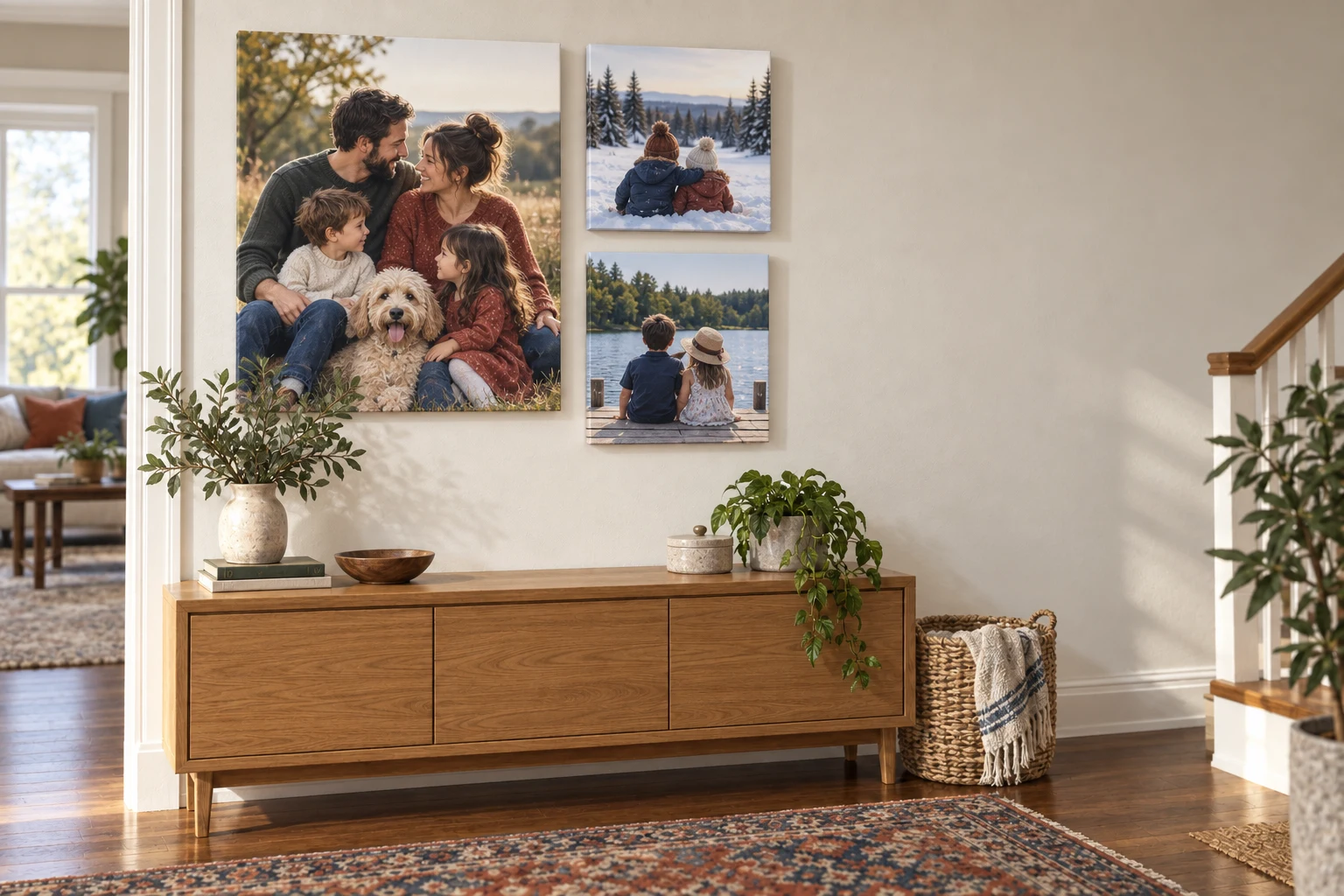
Within that boundary, choose a starting arrangement: perhaps one family photograph with two smaller moments beside it. Put the strongest picture where the eye naturally settles, and leave open wall beyond the group rather than unexplained holes between the first prints.
If you need an introduction to layout styles, our family gallery-wall guide covers the basics. Here, the extra decision is what happens when another photograph earns a place.
Give each new photograph a reason to join
It is easy to order another print simply because you took a good picture. A more useful question is whether it adds something the wall does not already show.
Your first group might contain a family portrait, a shared activity, and a photograph of someone with a pet. Next autumn, a new hobby or a grandparent’s visit could add a different part of family life. Another near-identical portrait may work better as a replacement than an addition.
Choose one rule you can keep without much effort. For example, add one shared experience each year, or give each household member a turn choosing a memory. There is no requirement for equal numbers of photographs or a perfectly matching season in every frame.
Record what is difficult to remember
Save a small note with the original image files and order records:
- The width and height of each print, plus its orientation.
- The canvas depth and edge treatment you chose.
- The gaps between pieces and the total width of the arrangement.
- A photograph of the wall viewed straight on.
This makes it easier to compare a future print with the group. Consistent physical details can help photographs from different years sit together, even when clothes, weather, and lighting change.
Compare options with the current sizes and prices whenever you add a piece. An old order is a reference, not a guarantee that every option remains available.
Rehearse the next addition before ordering it
Use paper shapes cut to the proposed dimensions to compare the existing group with an expanded version. Lay them out on the floor, or hold them against the wall with help. If using removable tape, check its suitability for the surface first.
Look from the places where you actually see the collection: the doorway, the sofa, or the end of the hall. Does the addition crowd a switch or make the group feel pushed against the ceiling? Could exchanging one older picture work better?
Our Toronto canvas size guide offers more context for matching a print to the room. Always use your own measurements before ordering.
A full wall can still change
When the boundary is full, rotate photographs rather than expanding automatically. A previous favourite might suit another room, or you may decide the original collection is still the one you want. A family display is allowed to pause.
For the first group, choose the photographs, keep their original files together, and start your canvas project. Give this autumn a place on the wall without deciding where every future memory must go.
AI-generated photo-style mockup of a family canvas display; not an actual customer order. Display is not to scale.